Declared objective
László Boros presents his background in biochemistry, metabolomics, and laboratory profiling, then states his aim to position "deutenomics" within biochemistry and translational medicine. The emphasis is on existing literature and the question of where the field stands relative to clinical applications.
Isotopic Fractionation
The presentation discusses how biological reactions and processes can separate isotopes to varying extents. For the reader, this concept must be distinguished from the number on a label: fractionation is a process, whereas isotopic concentration or ratio is a measurement requiring a specific method and scale.
Proton, deuteron, and chemical bonding
Boros explains the mass difference between the proton and deuteron and its potential consequences for vibrations and bonds involving hydrogen. A physicochemical difference may be real without the subsequent biological effect having been clinically demonstrated.
Diagnosis and imaging
The speaker mentions attempts to use deuterium signals as tools for imaging or diagnosis. For a medical test, analytical validation, sensitivity, specificity, comparative data, and evidence that the result changes clinical decision-making would be required.
How we review the literature
We locate the original article, authors, study population, methodology, comparators, and uncertainty. The presentation provides a reading pathway and vocabulary, not certification of a method or product.
The kinetic isotope effect: what it means—and what it does not calculate
An important point in the explanation is the change in reaction rate when the isotopes involved are altered.IUPAC distinguishes kinetic effects from equilibrium effects.This definition does not provide a universal multiplier for the organism. A figure for a reaction must be tied to that specific reaction and its conditions; it cannot be automatically applied to all chemical bonds, all tissues, or a concentration difference between two waters.
Tracking a molecule and modifying an intervention.
Boros discusses the use of deuterium in metabolic tracing and imaging. For the reader, this introduces an important distinction: a substance may serve to track a process without that use demonstrating the benefit of a dietary intervention. The questions differ. The first asks what can be detected, what resolution the method has, and how the signal is interpreted. The second requires evaluation of an outcome and a comparator. This separation aids in interpreting presentations that bridge the gap from the laboratory to translational medicine.
00–08 min · Biochemistry and translational medicine.
László Boros presents his background in biochemistry and metabolomics and asks where ‘deutenomics’ might fit within biomedical research. He announces that he will walk through the literature, reactions, and potential clinical applications. Boros distinguishes between the physicochemical effects of isotopes and interpretations that attempt to link them to disease. This distinction remains the guiding thread of the presentation: a process can be measured in a reaction without its clinical significance having been established.
08–16 min · Isotopic effects and cellular models.
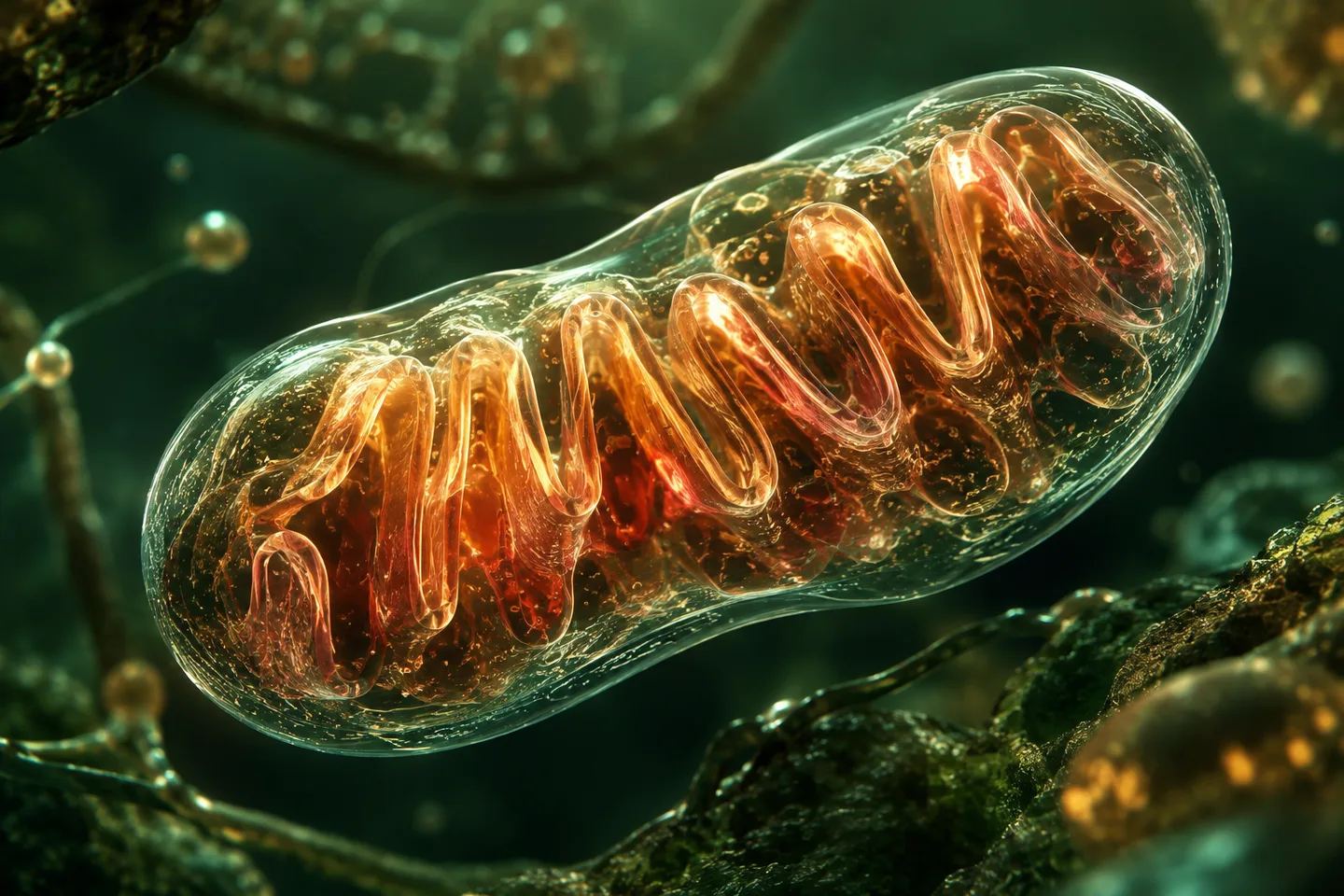
Boros discusses earlier studies and examples of cells in which isotopic substitution might influence hydrogen-dependent reactions. In this segment, transitions emerge toward the behavior of certain tumor cells and discussions of mitochondria. Transcriptions sometimes contain distortions, so we do not reconstruct a laboratory finding when the method or model is insufficiently specified. We retain the general idea presented: an isotopic effect must be tied to the specific reaction, concentration, and experimental conditions.
16–24 min · Fractionation and metabolic reactions.
The speaker delves into isotope fractionation and metabolism, then moves on to reactions of the citric acid cycle. He links hydrogen exchange to multiple enzymatic steps and to how intermediates traverse different pathways. A metabolic pathway diagram illustrates the sequence of molecules, not the precise distribution of isotopes in the body. To reproduce a result, one must know which sample was analyzed, where the deuterium was located, and which method was used.
24–32 min · The citric acid cycle and fumarate hydratase
Boros traces the formation and transformation of metabolic intermediates and discusses fumarate hydratase, including its role in interconverting fumarate and malate. He connects this to the literature on tumors and the question of whether specific enzymatic alterations alter cellular metabolism. Mentioning a pathway commonly studied in cancer research does not demonstrate that reduced-deuterium water treats cancer. The article here outlines the presentation’s subject and maintains the distinction between biochemical mechanism, cellular studies, and human intervention.
32–40 min · Fatty acids, ketone bodies, and atom tracing
The presentation shifts to fatty acid synthesis and oxidation, ketone bodies, and the possibility that hydrogen from substrates may be redistributed during metabolism. Boros discusses research using deuterium-labeled molecules to observe what is retained or lost along a pathway. An isotopic tracer is a measurement tool and does not equate to a dietary intervention altering the isotopic ratio of water. The distinction between tracer and treatment is essential in this segment.
40–48 min · Deuterium NMR and labeled substrates
Boros describes magnetic resonance imaging and examples of experiments using deuterium-labeled glucose or acetate. Slides compare signal intensity over time and show how the label changes through metabolic reactions. Such an image can indicate where a tracer accumulates under experimental conditions; it does not automatically demonstrate a clinical outcome or the efficacy of a commercial water product. The transcript does not always clearly preserve molecular names and values, so the article does not fabricate numbers.
48–56 min · From cells to the tumor literature
In this section, Boros links isotopic tracing to cellular metabolism studies and discusses examples from the tumor literature, including research on renal cell carcinoma. He highlights the potential for integrating metabolomics with isotopic signals in research. Such findings may raise questions about mechanisms, but they do not demonstrate cancer prevention or treatment. Clinical conclusions require patient studies, complete datasets, and appropriate comparisons.
56–64 min · Limitations of diagnostic applications
In conclusion, Boros revisits the question of whether deuterium measurement could become useful in imaging, diagnosis, or translational medicine. He cites literature across various cancer types and other medical contexts, yet this presentation does not constitute clinical validation of a diagnostic test. For a diagnostic instrument, analytical precision, sensitivity, specificity, reproducibility, and the utility of the result in clinical decision-making must be evaluated. The closing remarks thank collaborators and leave the research agenda open.
Isotopic effect does not imply a universal effect
Boros begins with the mass difference between the proton and deuteron and discusses its impact on the rates of certain reactions. In a precise reaction, bond breaking or formation can proceed at different rates depending on the isotope. This does not imply a common multiplier affecting all enzymes, cells, or tissues. When such an observation is extended to whole-body metabolism, the specific chemical bond, reaction, concentration, and conditions must be specified. Hence, a single value from an experiment cannot be directly applied to a water label or a clinical result.
The citric acid cycle and metabolic water
In the section on metabolism, Boros tracks intermediates of the citric acid cycle and discusses reactions that form or consume water. He links these hydrogen exchanges to fatty acids, ketone bodies, and mitochondrial substrates. A deuterium tracer can reveal where an atom ends up in a pathway, but it does not automatically measure changes in the body’s overall isotopic pool. The method must distinguish the tracked atom, the cellular compartment, and the water produced in the reaction. This distinction explains why metabolomics and dietary intervention represent separate analytical questions.
Imaging and the cancer literature
Boros presents magnetic resonance experiments and cellular studies, including examples from the literature on renal cell carcinoma and other tumors. The signal from a labeled substrate can aid in observing metabolism in a model; it does not constitute evidence of treatment efficacy. For a diagnostic test, analytical precision and clinical utility must be established; for a therapy, patient outcomes must be evaluated. The article does not infer from the presented images or mechanisms that reduced-deuterium water cures or prevents cancer.
What does a deuterium tracer measure?
In Boros’s examples, deuterium atoms can serve as markers to track the transformation of a substrate through metabolic reactions. The outcome depends on where the label is introduced, the pathway followed, the tissue type, and the timing of measurement. An image or analysis may show the spatial distribution of the signal in a model and aid in comparing metabolic states. It does not automatically measure the body’s overall deuterium level, nor the effect of consuming water with a specific composition. In the presentation, imaging and drinking water are discussed within the same thematic area, yet they represent distinct experimental questions.
Two agendas: diagnostic instrument and intervention
When Boros discusses potential applications in imaging or diagnostics, the question is whether a signal can be obtained with accuracy and whether it provides useful information to the clinician. When discussing an intervention, the question becomes whether altering exposure yields a clinical benefit and whether it is safe. For the former, reproducibility, sensitivity, and specificity of the method are relevant; for the latter, controlled comparison, monitoring of adverse effects, and patient-relevant outcomes are key. A discovery about a tumor’s metabolism may advance research without constituting a treatment. The presentation outlines translational possibilities but does not validate a diagnostic test or cancer therapy.
Why concentration and reaction site matter
The isotopic effect discussed by Boros depends on the specific chemical reaction and the position at which the atom is substituted. A labeled molecule may follow a different pathway than extracellular water, and a signal in one tissue does not automatically reflect all tissues. To compare one experiment with another, the tracer concentration, substrate, duration, and detection method must be specified. Boros uses examples from metabolomics and imaging to illustrate how these questions can be framed. Without these details, a metabolic diagram explains a possibility but does not establish the clinical effect of consuming reduced-deuterium water.
This article is a thematic synthesis of the DDS 2021 presentation, not a verbatim transcript. Minute-taking is approximate, and automated transcription may contain errors in names or numbers. Speakers’ statements are not automatically validated independent results. See theDDS 2021 11-materials guide.
Published on 12 September 2026. Documented updates on 23 September 2026. Event information may be updated by organizers.