Point of departure
Thomas Seyfried builds his presentation around the idea that energetic metabolism and mitochondria should play a central role in explaining cancer. He contrasts this perspective with the somatic mutation theory and cites statistics and experiments to support his argument. The journal presents this stance as the speaker’s thesis, not as medical consensus.
Mutations and Metabolism
The presentation does not deny that tumor cells may harbor mutations. Seyfried’s question is whether mutations alone initiate the disease or whether they arise in a context where cellular respiration is impaired. For the reader, this distinction matters: a causal hypothesis must be tested through experiments that clarify the sequence of events and rule out alternative explanations.
The Warburg Effect
Seyfried discusses the Warburg effect—the increased reliance on fermentation and glycolysis by many tumor cells, even in the presence of oxygen. The phenomenon is real and well-studied, but it does not imply that all cancers share identical biology, nor that inhibiting a single metabolic pathway cures the disease. Tumor type, stage, and concomitant treatment significantly affect interpretation.
Mitochondrial Experiments
One section of the presentation examines nuclear–cytoplasmic transfers and observations in which normal mitochondria appear to influence the behavior of certain tumor cells. These are mechanistic experiments, valuable for probing causality, but they are not clinical trials and do not establish therapeutic efficacy in patients.
From Mechanism to Therapy
The speaker discusses the development of metabolic therapies and approaches that might complement existing treatments. The recording does not provide a validated clinical protocol, a defined dosage, a cure rate, or a comprehensive comparison with the standard of care. We do not convert ideas into dietary, pharmacological, or reduced-deuterium-water recommendations.
What Can Be Responsibly Stated
The article documents the concepts and arguments presented, then separates observations from interpretations. There is no evidence here that reduced-deuterium water prevents or cures cancer. A patient should not discontinue chemotherapy, radiotherapy, surgery, immunotherapy, or any other prescribed treatment based solely on a public presentation.
00–08 min · Metabolic theory and mutational model
Thomas Seyfried presents his perspective on cancer and critiques explanations that place genetic mutations at the center of all causes. He argues that cellular energetic dysfunction and mitochondria should play a more prominent role. The speaker describes the somatic mutation theory and notes that some therapies developed within this framework have not yielded the expected outcomes. These are Seyfried’s own theses and his selection of supporting arguments—not medical consensus. The article does not suggest that reduced-deuterium water treats cancer.
08–16 min · Mutations and cell-transfer experiments
Seyfried discusses the history of the somatic mutation theory and questions whether genetic changes are the initial cause or a consequence of cellular dysfunction. He describes nucleus–cytoplasm transfer experiments, which he interprets as supporting the role of mitochondria. Such models can test biological mechanisms, but they are not clinical studies; their interpretation and applicability to humans remain open questions.
16–24 min · Mitochondria, cristae, and the Warburg effect
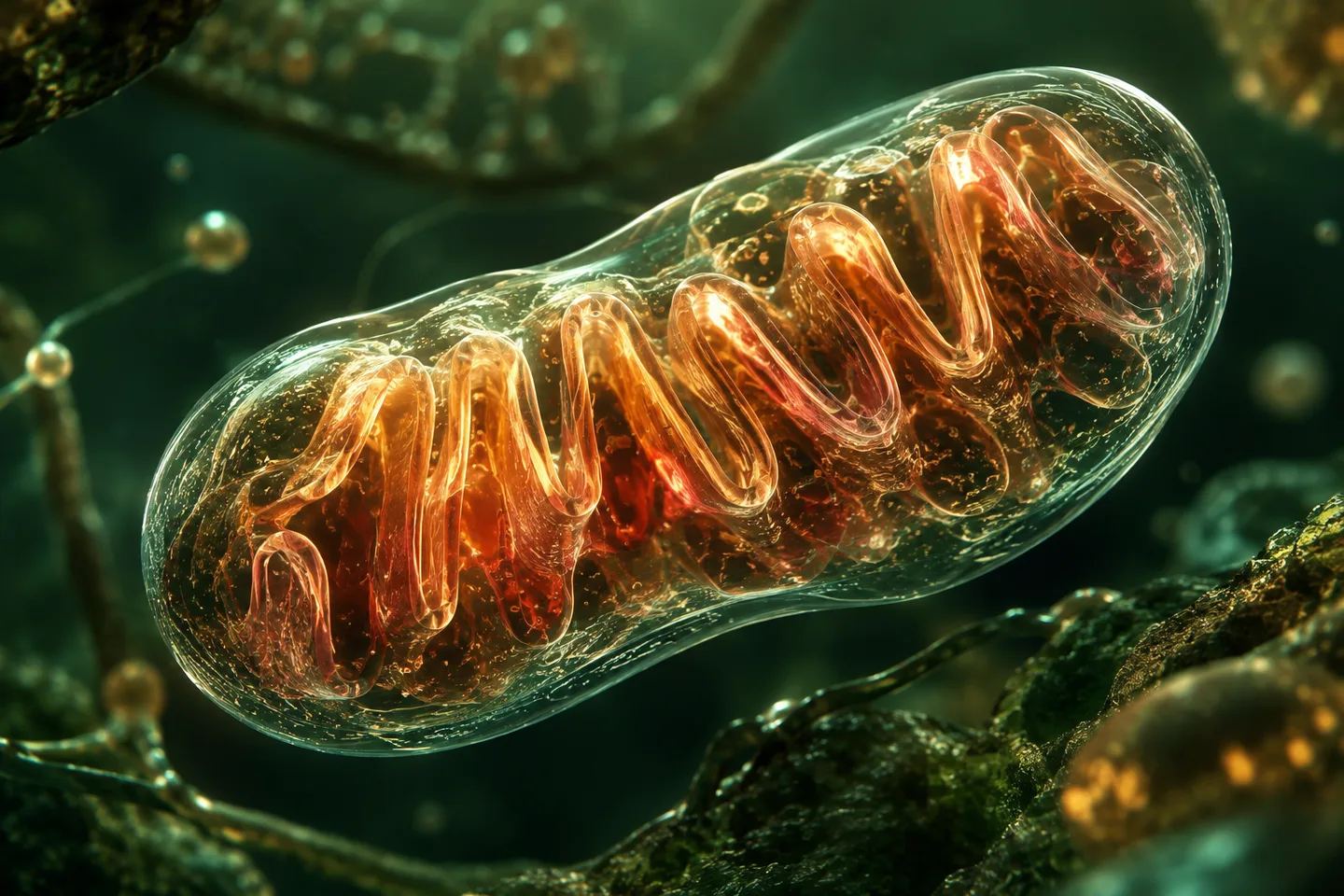
The presentation explains mitochondrial structure, including the inner membrane cristae, and compares cellular respiration with fermentation. Seyfried discusses the Warburg effect and pyruvate production, then asks how these processes relate to ATP generation and mitochondrial status. The metabolic description does not indicate that a single process explains all tumors; cancer encompasses diverse diseases, and outcomes depend on tumor type and the experimental model used.
24–32 min · Metabolic fuels, invasion, and glucose
Seyfried turns to the fuels utilized by tumor cells, their growth, and local invasion. He links glucose utilization to tumor proliferation and presents experimental data and examples to support his model. These observations do not justify lowering blood glucose as a home-based treatment, nor do they support a universal diet. Clinical conclusions require knowledge of the cancer type, concurrent treatments, and the outcome being assessed.
32–40 min · Metabolic therapy and clinical examples
The speaker then describes metabolic therapies and cases he presents as encouraging. He refers to the transition from preclinical concepts to human testing. A single report or clinical case does not establish efficacy: controlled studies, assessment of adverse reactions, comprehensive outcomes, and comparison with standard care are required. The article does not extract a dietary or pharmacological protocol from this presentation.
40–44 min · Reported cases and conclusion
In the final minutes, Seyfried recalls several cases and revisits the mechanisms by which tumor cells may generate ATP. These reports are attributed to the speaker and are not presented as evidence that an intervention cures disease. The presentation does not demonstrate that reduced-deuterium water prevents or cures cancer. No one should alter or discontinue oncological treatments based on these statements; medical decisions should be made in consultation with the oncology team.
The presented hypothesis and the plurality of cancer biology
Seyfried argues that energetic dysfunction and mitochondria should be central to cancer explanations, comparing this view to the somatic mutation theory. The article conveys his position as a research model discussed at the summit; it does not assert that mutations are irrelevant or that a single cause underlies all cancers. An experiment may test the sequence of events in a model, but a clinical conclusion requires patient data and comparison with existing treatments. This distinction avoids turning a scientific debate into a therapeutic promise.
What cell transfer experiments show—and what they do not show
Nucleus–cytoplasm transfer experiments are used by the speaker to explore the role of mitochondria in cellular behavior. Such experiments may provide mechanistic insights in a controlled system, but they do not constitute human therapeutic trials. Likewise, observing glycolysis or the Warburg effect alone does not prove that inhibiting a given pathway cures diverse tumors. Each conclusion must be evaluated in light of the methods, reproducibility, tumor model, and authors’ stated limitations.
Clinical case reports are not cure rates
Finally, Seyfried recalls cases and metabolic approaches he considers promising. A selected report does not provide the denominator, non-responders, adverse events, or comparison with standard care. The article does not recommend a ketogenic diet, medications, or reduced-deuterium water as cancer treatment. No claim in this presentation demonstrates that water cures or prevents cancer; oncological decisions must be made in consultation with the medical team.
How Seyfried constructs his argument
Seyfried begins with a critique of the somatic mutation theory and places central emphasis on energetic metabolism and mitochondria. He then draws upon cell transfer experiments, discussions of respiration and fermentation, and observations on glucose utilization to support his metabolic framework. These constitute the speaker’s argumentative steps; they do not imply that all tumors share a single cause or that a single intervention is effective across all cases. The article maintains its critical stance toward the mutational explanation and acknowledges that the arguments presented do not substitute for a comprehensive evaluation of the broader oncology literature.
From Metabolism to Patient Care
The presentation transitions from experiments and models to reported cases and the possibility of metabolic interventions. It is precisely in this transition that caution is required: a result in a cell or animal does not establish a safe dose for a human; a single case does not yield a response rate; and a diet or biomarker cannot substitute for a clinical trial. The case report does not demonstrate that reduced-deuterium water prevents or cures cancer. We do not derive from it a dietary or therapeutic regimen, nor do we recommend altering standard oncologic care.
The Warburg Effect in the Presentation’s Narrative
Seyfried employs discussions of cellular respiration, fermentation, glucose, and ATP to articulate his metabolic perspective on tumors. In summary, the Warburg effect is presented within the speaker’s argumentative framework—not as a complete explanation for all cancers. The presentation links metabolic processes to proliferation and invasion, then moves on to therapeutic proposals and case reports. Each transition, however, demands distinct types of evidence: mechanism, preclinical experimentation, and clinical outcomes. The text preserves the sequence of this reasoning to allow for its evaluation, without automatically adopting its conclusions.
Why We Do Not Publish a Protocol Derived from Cases
The report evokes metabolic interventions and reported cases but does not provide an individualized guide. An oncologic protocol must be evaluated with respect to cancer type, stage, concomitant treatments, nutrition, and safety; these data cannot be reconstructed from a brief presentation. Altering diet or treatment may have serious consequences and must be discussed with the medical team. The presentation does not establish that reduced-deuterium water prevents or cures cancer. The article records Seyfried’s position and does not recommend replacing or discontinuing standard oncologic care.
Open Questions After 44 Minutes
Key questions remain regarding the extent to which the discussed models generalize across tumor types, how competing explanatory theories are compared, and what outcomes would demonstrate a safe and effective intervention. The presentation cites studies and cases the speaker considers relevant, but the article does not claim to have independently verified each reference mentioned verbally. Consequently, the synthesis attributes the arguments and separates the discourse documentation from a systematic evaluation of oncology.
An Important Limitation Regarding Cancer
This presentation is documented here as the speaker’s position, not as a medical recommendation or clinical conclusion. There is no evidence in this material that reduced-deuterium water cures or prevents cancer. The article does not recommend modifying or discontinuing oncology treatments; decisions are made collaboratively with the medical team.
This article is a thematic synthesis of the DDS 2021 presentation, not a full transcript. Timestamps are approximate, and automated transcription may contain errors in names or numbers. Speakers’ statements are not automatically validated independent results. Seethe guide to the 11 DDS 2021 materials.
Published on 12 September 2026. Documented updates on 23 September 2026. Event information may be updated by organizers.